
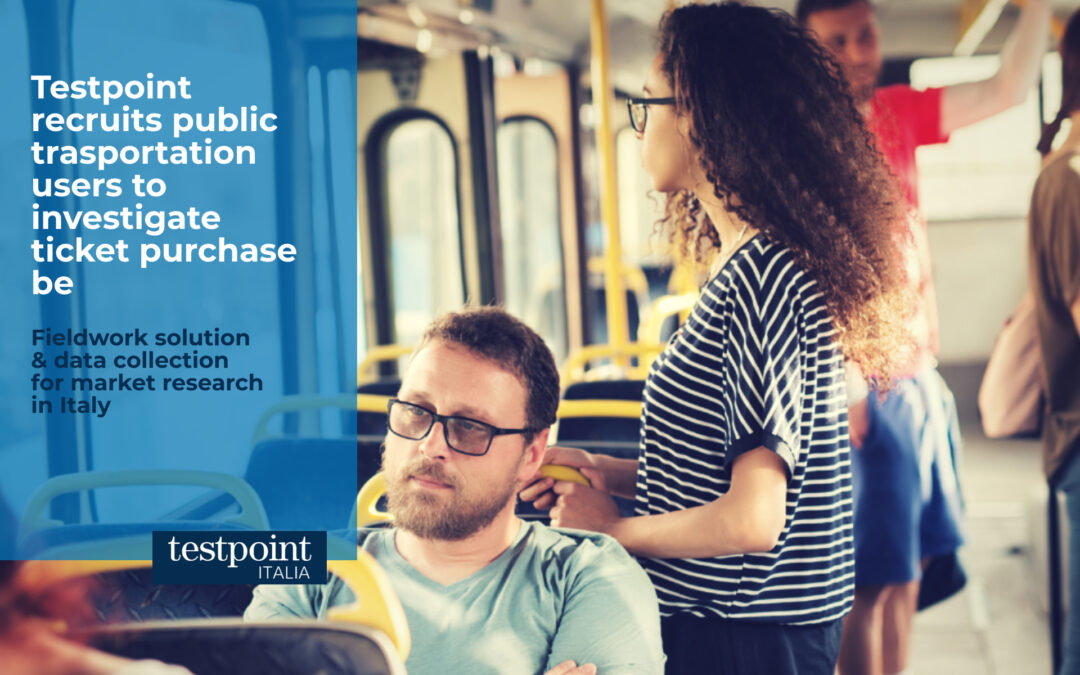
Testpoint recently conducted a survey among urban public transport users in Rome to understand their travel ticket purchasing habits.
Testpoint conducted the recruitment: 15 frequent users of urban public transport were identified and interviewed by the end customer directly in their offices. The objective of the research, conducted through qualitative interviews lasting approximately one hour, was to evaluate ticket distribution and purchase channels.
Recruitment for qualitative interviews
Today, urban mobility is evolving, and smartphone apps are a key component: citizens can more easily plan their trips by receiving information on their smartphones about schedules, travel times, bus stops, and even traffic conditions. All of this helps reduce uncertainty related to public transport.
The way we purchase tickets for urban public transport is also changing: in addition to the traditional paper tickets sold at tobacconists, newsstands, or at ticket booths in metro stations, there are now dedicated apps, and in large cities, passengers can also purchase tickets on board the bus by simply swiping their credit card on the card reader.
Has the lives of those who regularly use public transport changed? What are the preferred purchasing methods today? What are the unmet needs?
Testpoint interviewed 15 people in Rome who use public transport daily to get around the city for work or study. They were men and women of different age groups, some still purchasing exclusively paper tickets, others also using electronic systems (apps or credit cards).
All were required to visit the client’s offices for a qualitative interview lasting approximately 60 minutes. During the interview, under the guidance of a moderator, each respondent was asked to describe their travel ticket purchasing habits, focusing on the advantages and disadvantages of their usual methods and any difficulties they encountered, from obtaining paper tickets to navigating app websites or using ticket readers on buses.
